I have omitted confidential information in this case study. All information in this case study is my own and does not necessarily reflect the views of U.S. Customs and Border Protection.
Context
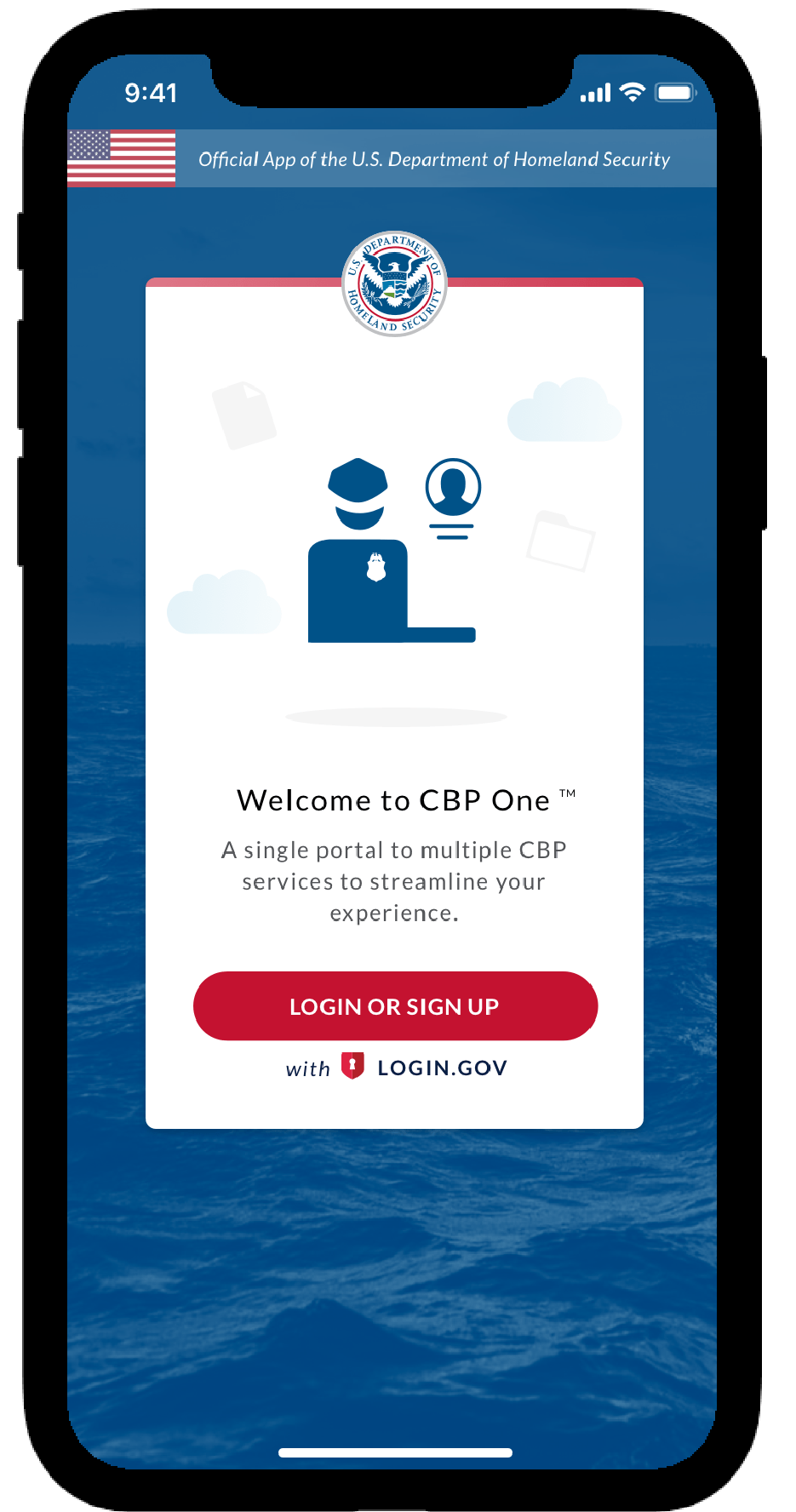
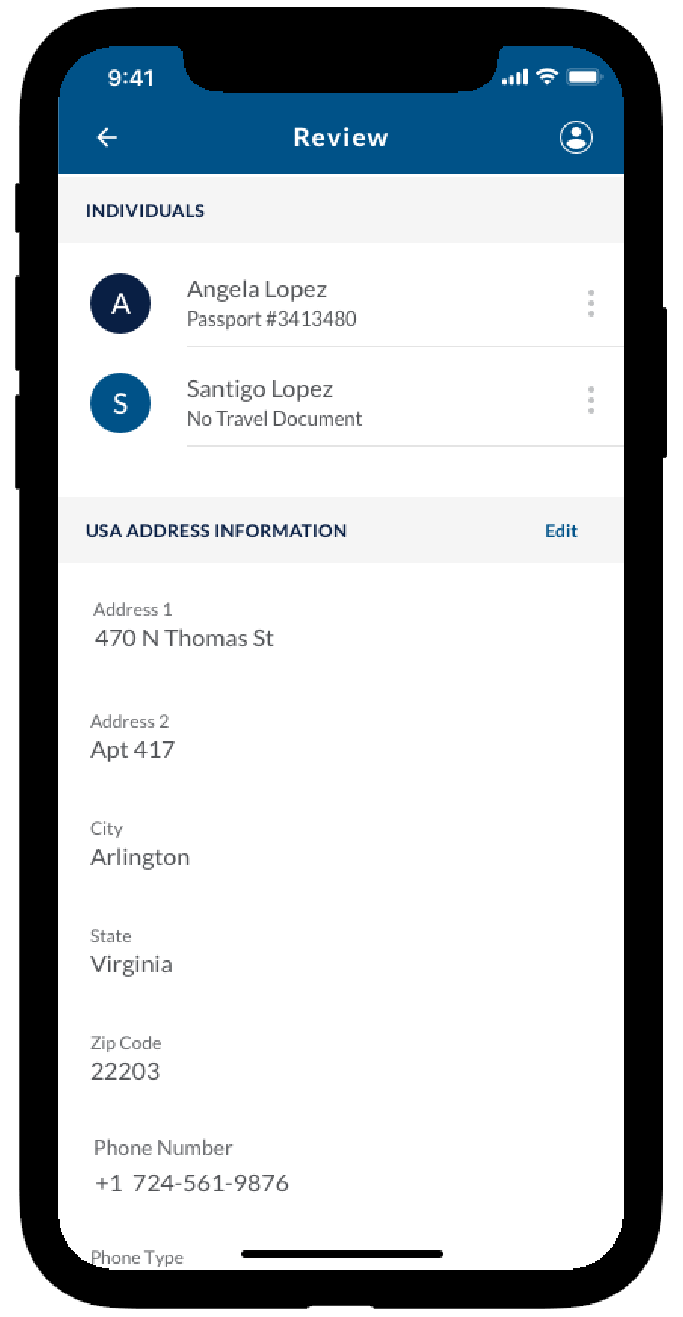
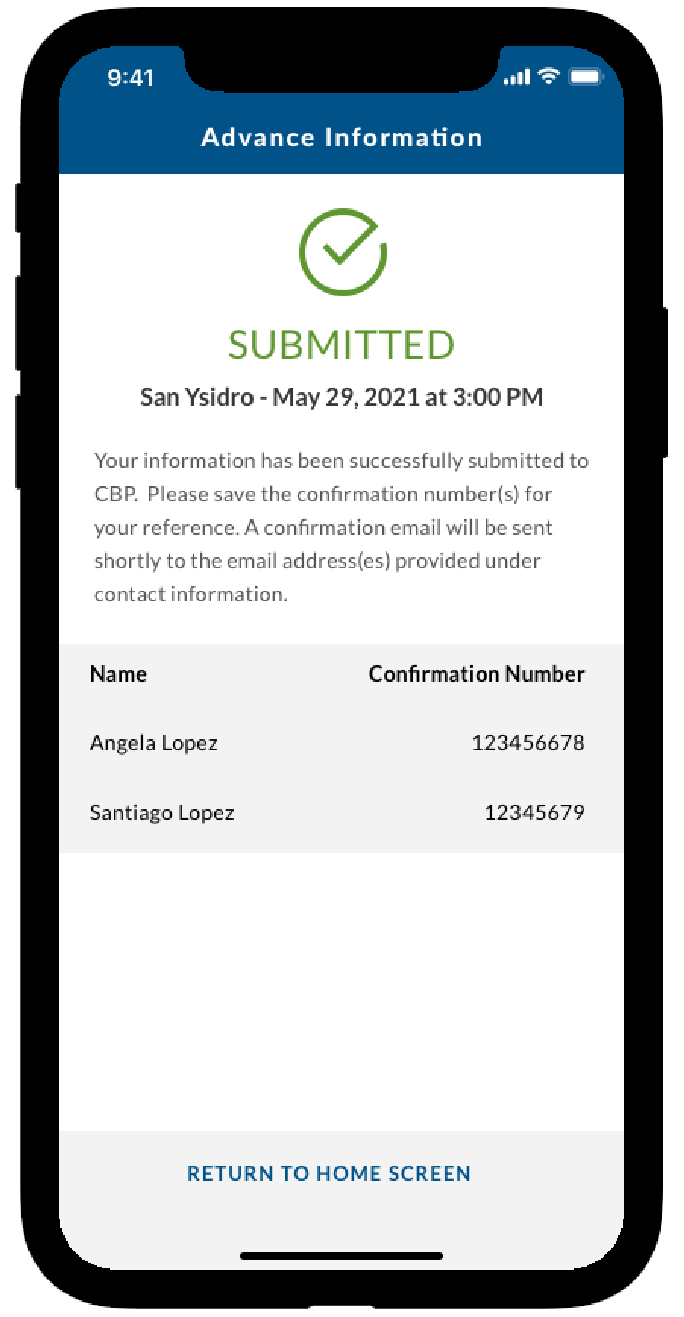
CBP One Mobile Application: CBP leadership identified challenges from having multiple detached services and applications available to various user types. CBP One was developed to modernize and streamline access to CBP services and features. It is a mobile app intended to act as an intuitive single point of entry for travelers and other users to access CBP services. Due to the multi-faceted nature of the app, I will be walking though one specific workflow in this case study: Submitting Advance Information for Certain Undocumented Individuals
The Challenge
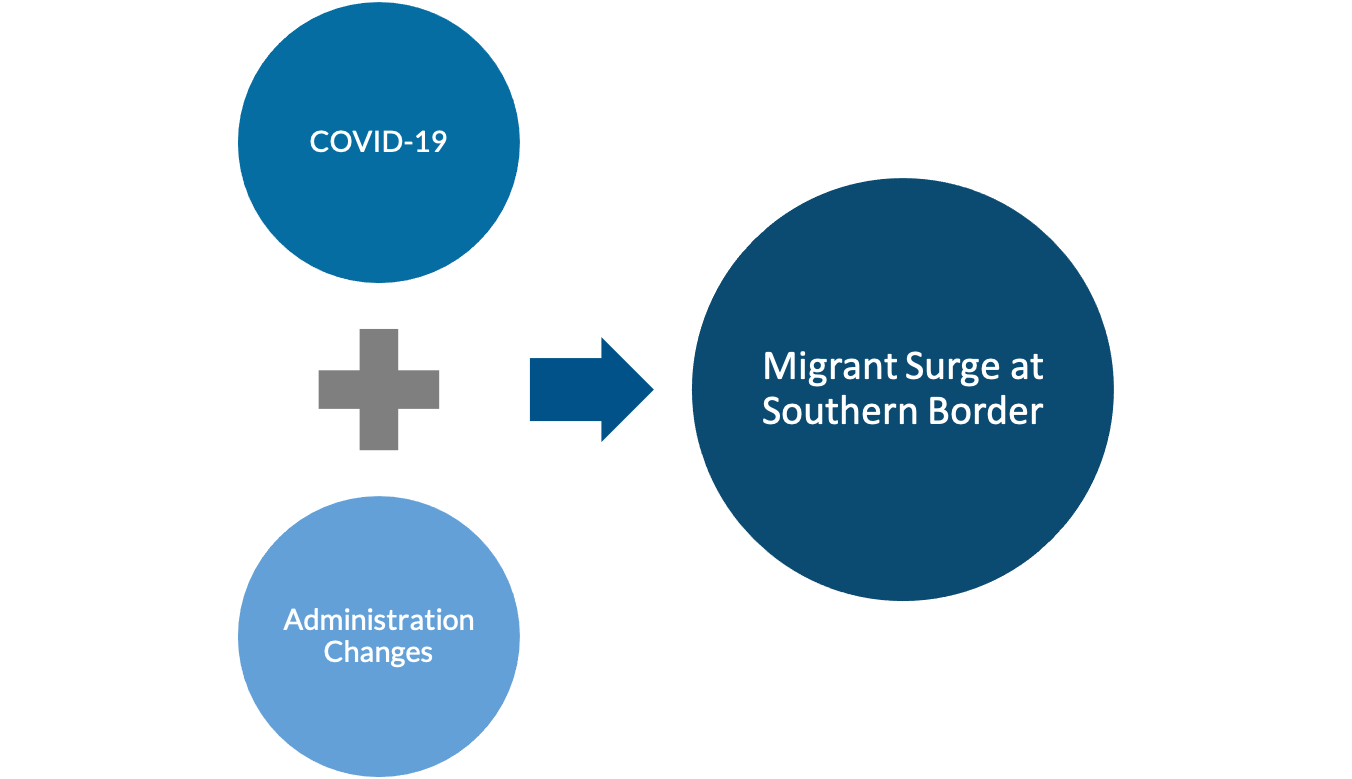
At the time of writing this case study (June 2021), the United States is facing the biggest surge of migrants at its southwestern border in 20 years as the Biden administration is struggling to handle an influx of individuals trying to cross the US-Mexico border. In addition to this surge, the Covid-19 pandemic further complicates the process. With the increase, there’s been a need to expedite the processing of these migrants.
The Opportunity
How might we decrease processing times at the border?
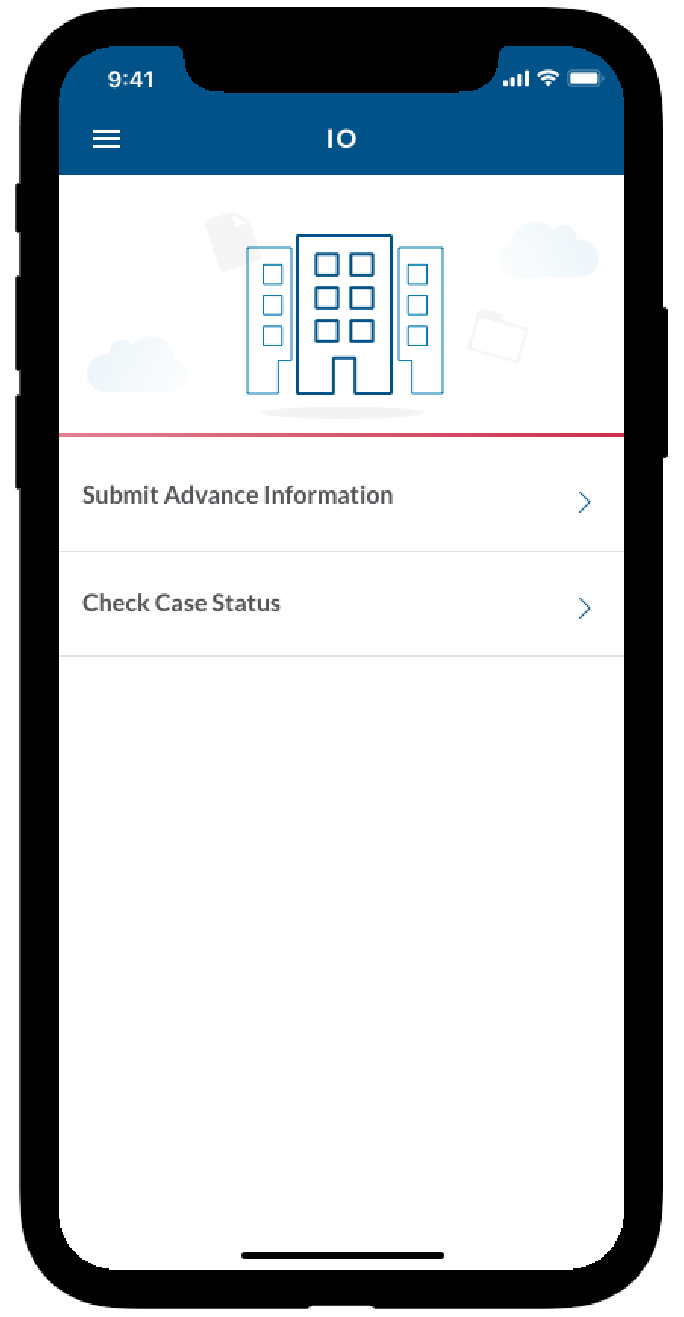
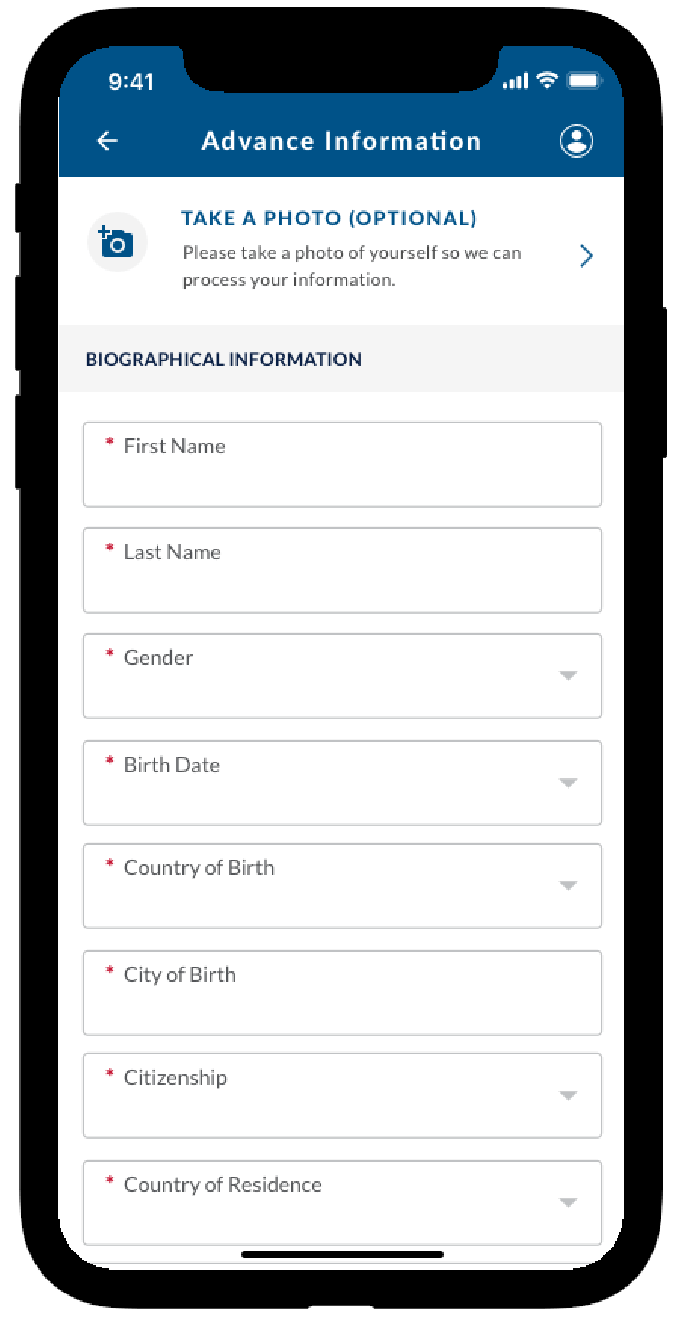
CBP Officers (CBPO) currently spend a significant time collecting and verifying basic biographic data about undocumented individuals, one at a time, during the inspection process. What if we could use CBP One where International Organizations (IOs) could help these migrants pre-populate their data ahead of time, saving time for both these individuals and the CBP Officers?
My Role
I was the lead and sole UX designer on this project. I worked alongside 7 developers, 2 testers, 1 scrum master and 3 product owners.
Overall
Due to the negative press in the media and the rising number of attempted border crossings, there was significant pressure from the Biden administration to get this feature pushed out ASAP. Sign‐off milestones were driven by engineering estimates and time to create the right design was the time left over.
Execution
I had 3 weeks (1.5 sprints) to create everything you see in this case study. The combination of a fixed launch date and aggressive scope created an intense environment with many coordination and time challenges. I led the design of this workflow from ideation to implementation. I created and presented workflows, mockups, and prototypes to gain buy‐in from executives, senior stakeholders and other teams throughout the project lifecycle.
Collaboration
My team worked in 2 week sprint cycles, with each sprint being extremely front-loaded for me on the design front. Once each feature was designed and signed off on by our client, the development team began the implementation. Concurrently, I would design the next feature in the roadmap, whilst also working with my team to execute the current feature to completion through UI reviews. I would also support our testers by walking them through the workflows and mockups so they knew what the expected behavior should be.
Final Product & Impacts
4.3 ★ Review
As of June 2021, we have a 4.3 star review on the Apple App Store. Unfortunately, due to the sensitive nature of this workflow, this feature is restricted by email domain and unavailable to public users.
↓ Processing Times by 50%
CBP One decreased the processing time of individuals at secondary inspection by 50%.
25K Submissions and 20K Downloads
Since the initial release of this feature in April 2021, we have supported the processing of over 25K individuals at 5 ports. Additionally, our app downloads increased significantly from ~3K to ~20K.
Design Iterations
Due to multiple downstream systems that were involved in storing this data, there was a lot of cross team collaboration in figuring out which specific data elements were needed. Additionally, with the ever changing requirements, I had to rapidly iterate on the workflows I created using high fidelity mockups for leadership sign-off.
1. Individual Submission
My first iteration was a workflow that only allowed one person per submission. This was the easiest to design and the quickest solution to implement. However, we soon came to realize that there was an increase in families trying to cross together, so to further streamline the process, I created a second iteration that allowed families to submit one application together.
2. Group Submissions with Familial Relationships
By allowing families to submit together, there was a lot of redundant data entry. For example, when Mary is asked for her family information, she has to put in some basic information (Name, Birth Date, Country of Citizenship, etc.) for her husband and child. Then, when it comes time for her husband to input his information, he would have to enter in all this information again about Mary, their child, and themselves. There was an opportunity here to reduce the amount of data entry needed by the user, but how? I decided the best way to do this for family submissions was to tie their relationship to each other so we could auto-populate some fields for each individual.
For this auto population to work, I created a workflow based off the following assumptions:
Only family units can be submitted together
Family history needs to be filled out for every individual, even if they're traveling alone (e.g. Mary has a husband and even though she’s crossing the border by herself, we still need to collect basic information around her husband)
Children information is only needed if the child is traveling with you - a child is defined as someone under the age of 18
Each person added in after the primary applicant will have to select their relationship to the primary applicant. Options will be limited to spouse, children, mother and father. Anything outside of this will have to be submitted individually, because these were the relationships that the backend was set up to support. Additionally, this should allow the system to tie each person’s relationship back to the primary, which can allow for some auto population of fields.
3. Group Submissions without Familial Relationships
However, USEC (the system that officers manually put all this information into) sent through a new spreadsheet of the data elements they required, and removed most of the family information that was initially in the second iteration. The family history data elements that were left were optional, so there no longer was a need to tie familial relationships. This also simplified the work for the backend, and I went ahead and removed the primary applicant/family member relationships since we are treating everyone independently of each other. While we were still allowing group submissions, this simplified the workflow from what we initially had.
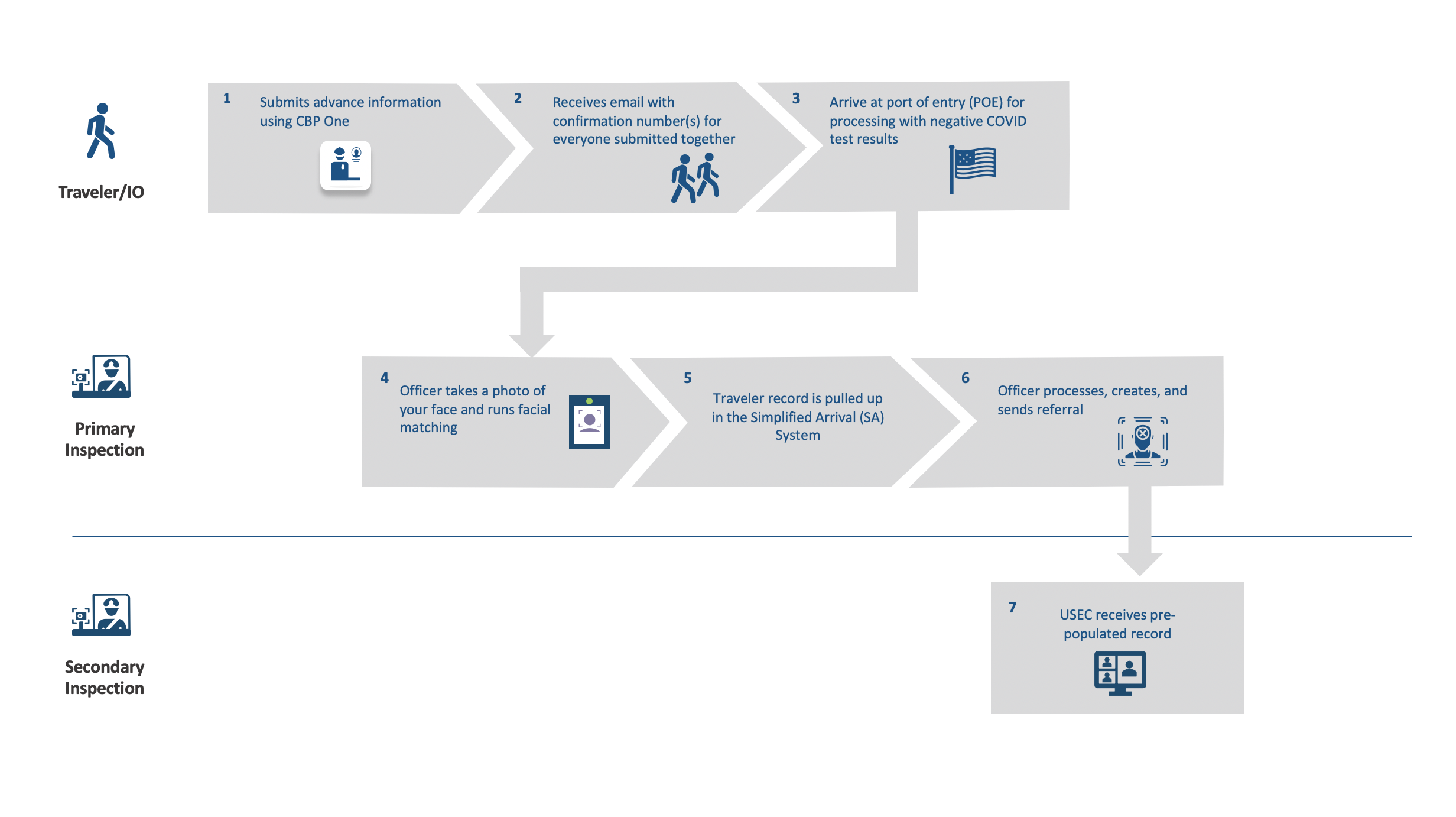
As-Is Process: Manual Entry (Processing Time ~ 2 to 3 hours per person)
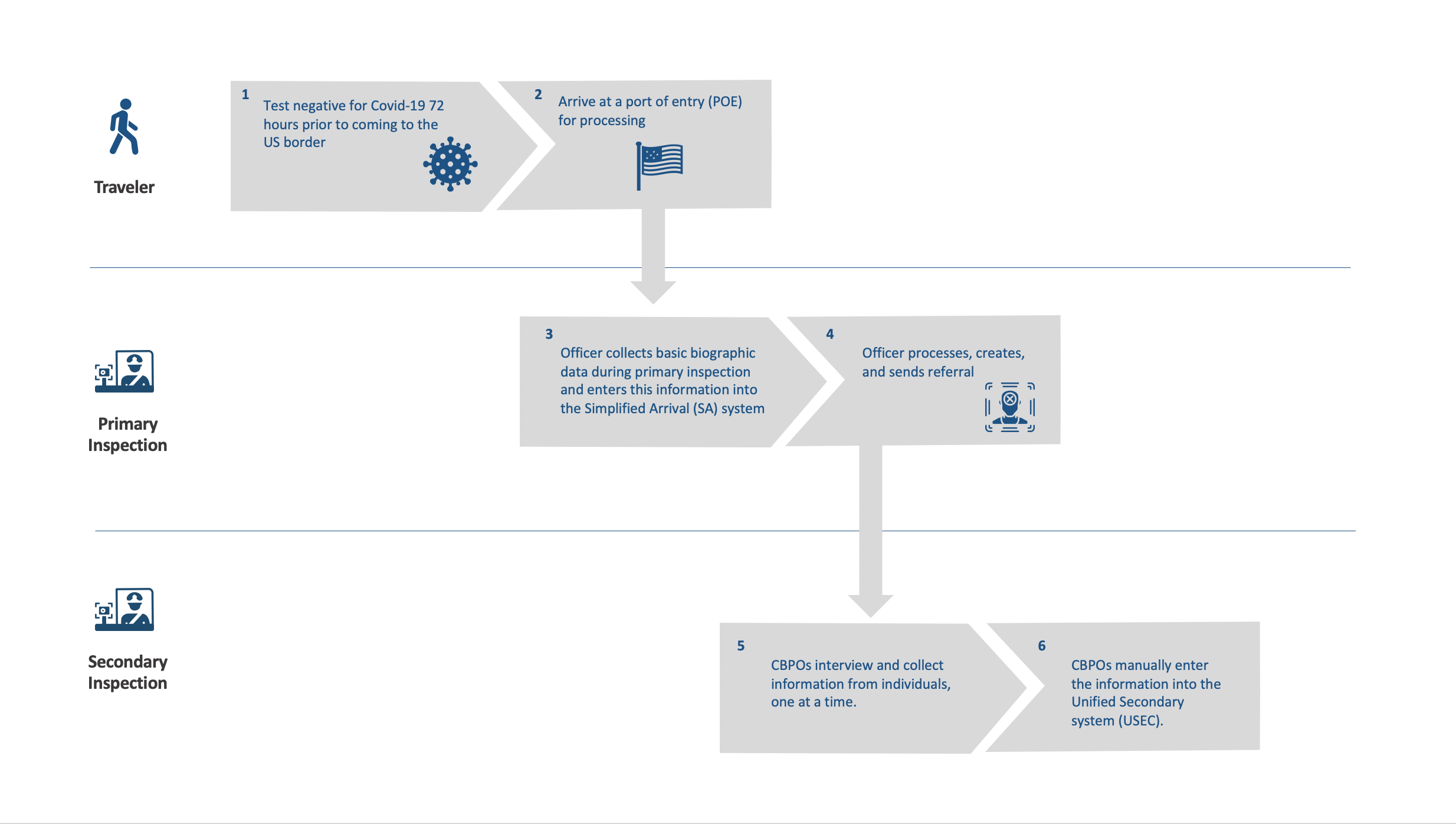
To-Be Process: Using CBP One (Processing Time ~ 1 hour per person)
Reflections & Next Steps
Future Iterations
In order to improve the processing capacity of the ports, we are currently working on a way for individuals to schedule a date and time for their requested POE. Additionally, I am working on a workflow that allows these individuals to reschedule their appointment time if needed.
Challenges
As with any team, time and resources were the biggest challenges. One of the most challenging things was the fact that each iteration I made was expected to be high fidelity. Instead of presenting low to mid fidelity wireframes to get quick feedback, each iteration I created was high fidelity per the client’s request which took a lot of rework every time the requirements changed.
Quickness over quality - due to the aggressive timeline, many decisions were made based on how quickly we could get the product out and less so on the quality of the product. I think a more reasonable timeline would have allowed us to release a closer to perfect solution the first time around vs the multiple releases we’ve completed since then for various bug fixes and discrepancies.
Impact
As an immigrant myself, I can only imagine the hardships of seeking asylum in a foreign country. I’m extremely proud of myself and my team for pulling this together so quickly and working many long nights to launch this. Knowing that this has really made an impact and improved the process for these individuals applying for asylum makes those long nights worth it.