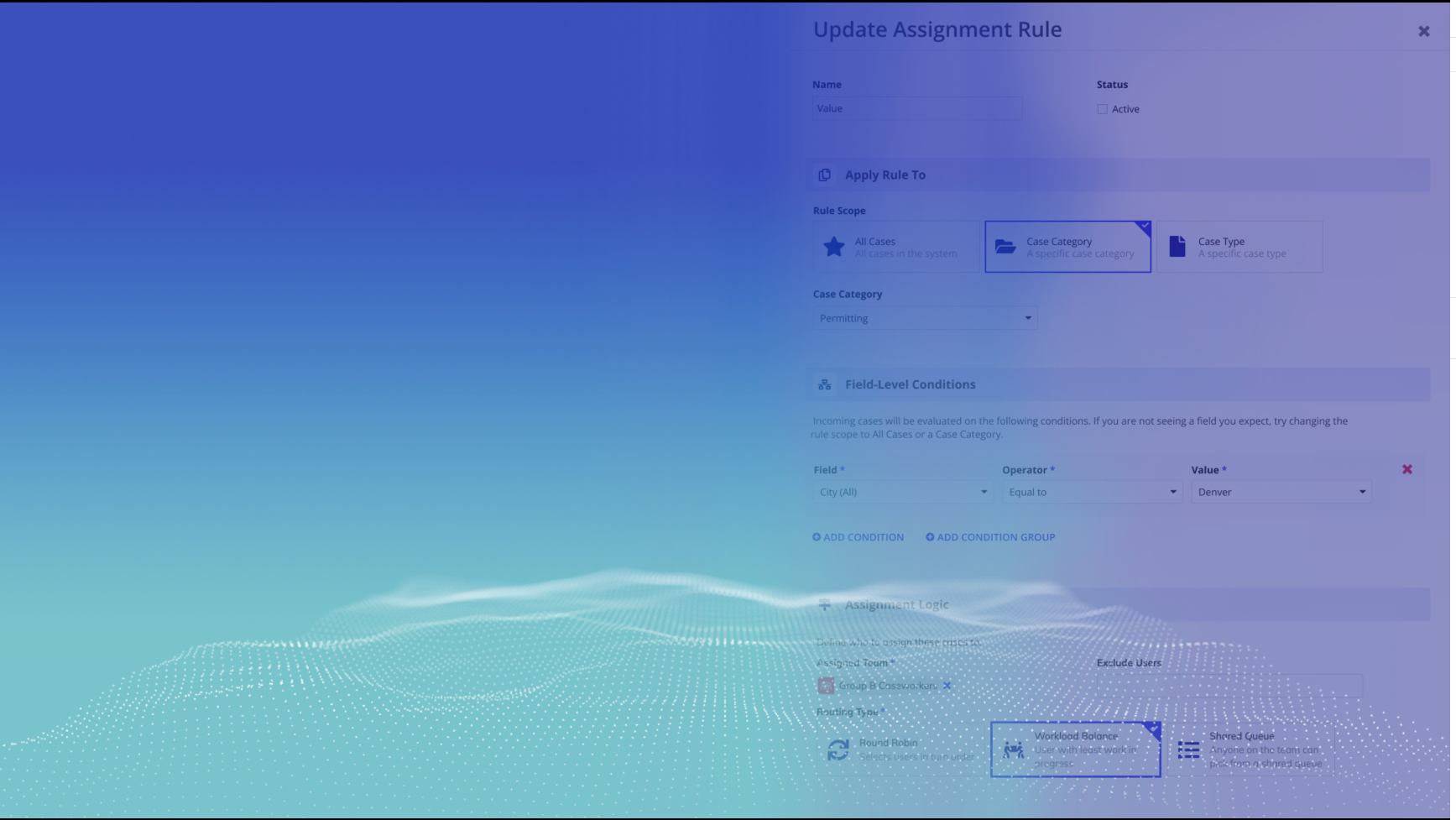
Automated Case Routing
Appian Connected Underwriting - Life Insurance
Context
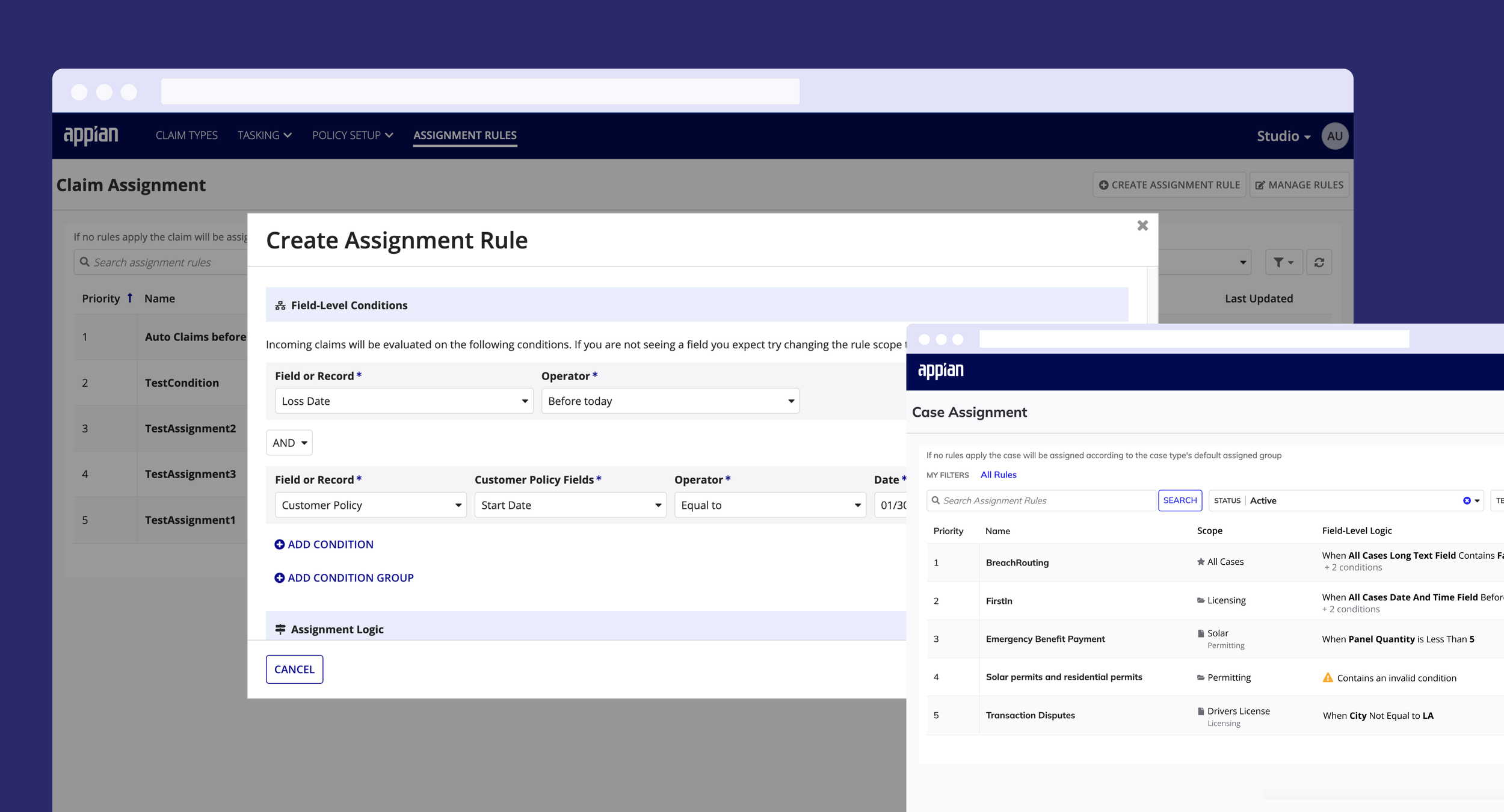
Modular feature within Appian that allows work items to be automatically routed and assigned based on configured rules and conditions.
My Role
Lead designer working on an embedded team with devs, QEs, and PM.
Timeline
The first iteration of this took about 5 weeks from concept to final design. This included the discovery and research phase. Additional changes were made in V2 which included UI updates along with functional changes such as the ability to pass in custom fields.
Business Challenge
Currently, users were manually assigning a case at the point of creation and our consulting teams would then build out an auto assignment functionality from scratch during implementation which slowed down each project.
What if we could ship with an OOTB module in every solution across our service lines (government, insurance, etc.) that was flexible enough to automatically route cases or work items?
Final Product & Impacts
Adopted by 5 Appian solutions and implemented on 17 customers across banking, insurance, and government industries.
Designing the Solution
Designing a versatile and scalable auto-assignment feature posed a significant challenge. I had to design a feature that was specific enough to meet the immediate needs of the life insurance sector yet flexible enough to be applicable across various industries. My product was the first to ship this out, but this was intended to be scalable and had to cater to a spectrum of solutions across different domains.
Balancing flexibility for the conditions was key. Too much nesting of conditions could make it hard to understand and diminish the usability, while oversimplification could limit its capability to create more complex rules.
My approach was two-fold. I had a series of discussions with other solutions around what their needs were with this feature. Additionally, I had discussions with underwriting managers to discuss what their assignment rules consisted of within insurance. Informed by these insights, I then analyzed real world insurance assignment rules that I was able to obtain from a close Appian partnership.
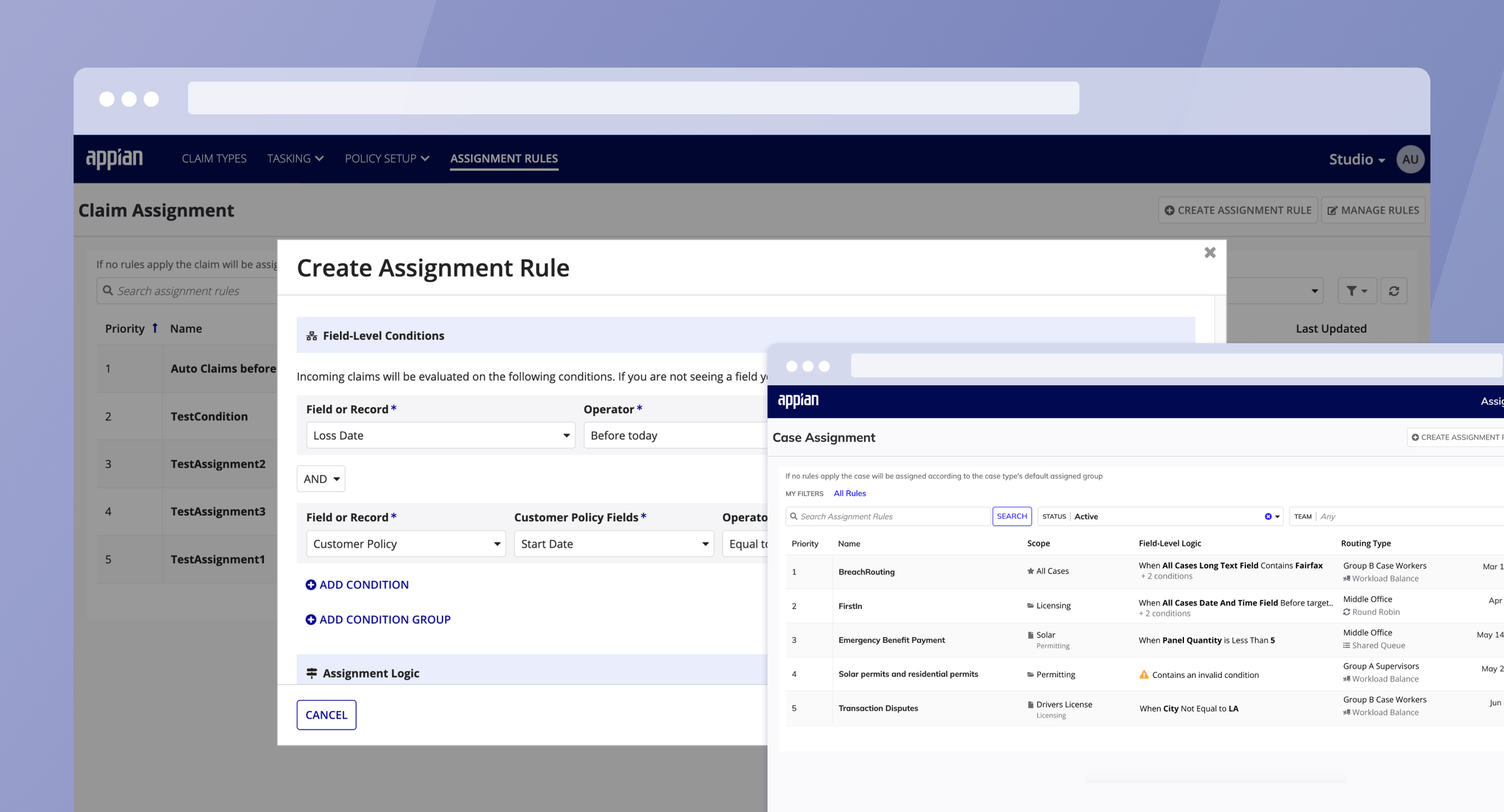
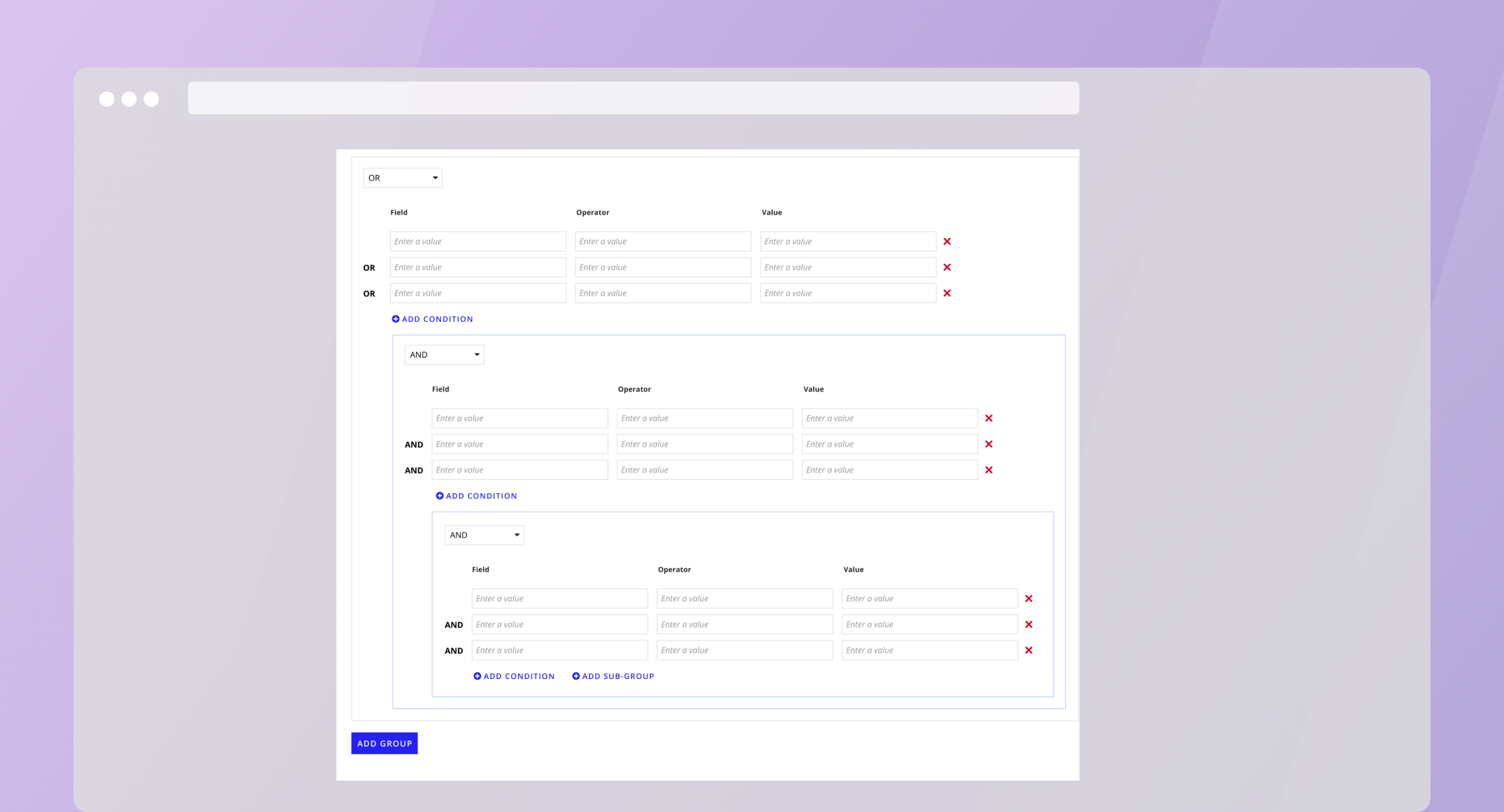
This led to the option below, which offers one level of nesting. This decision significantly impacted the selection of logical operators (and/or), the structuring of conditions, groups, and subgroups, and the implementation of validations.
One Level of Nesting: Allows rules to contain conditions and condition groups, offering a balance of simplicity and functionality.
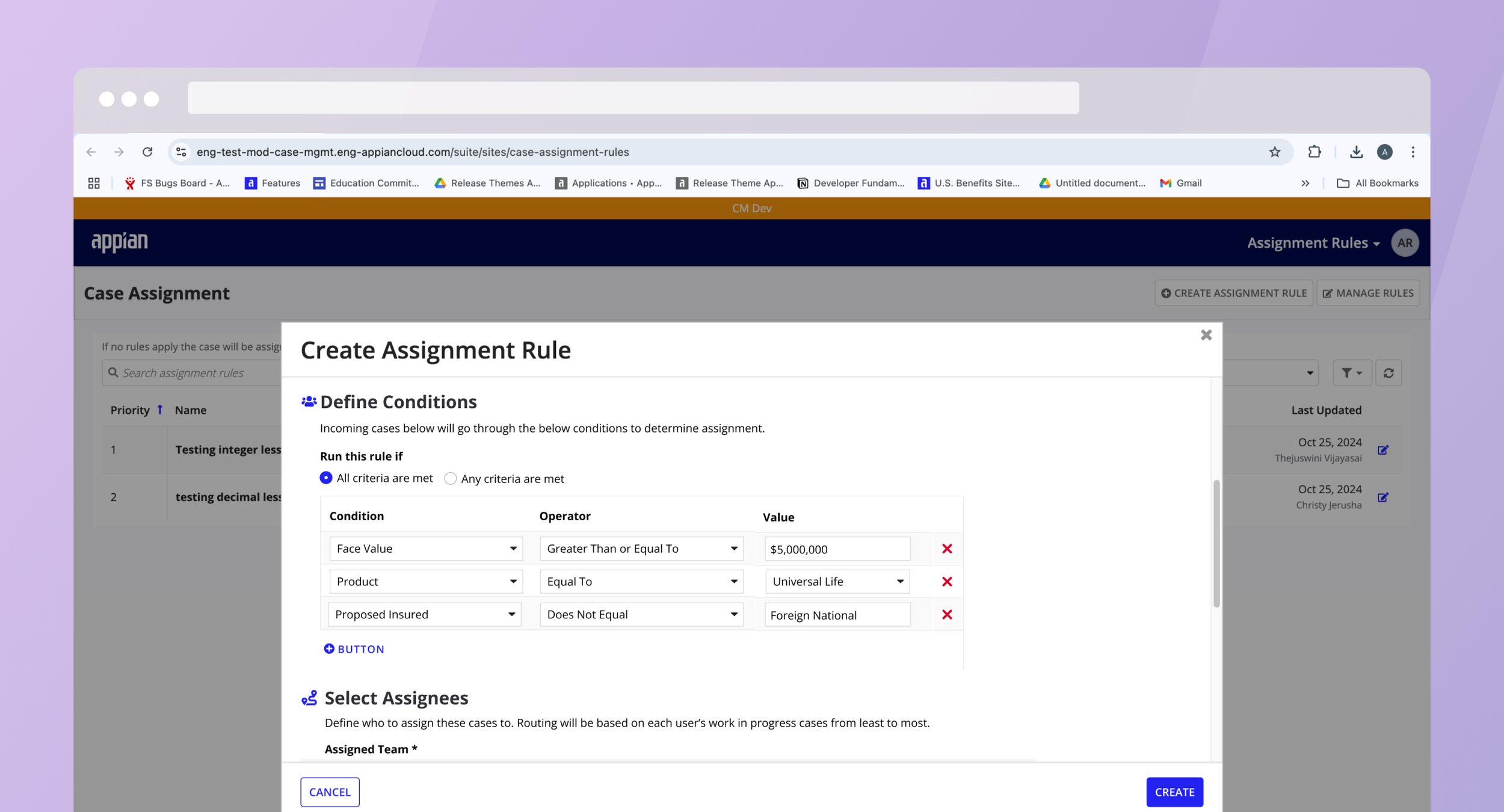
Multi-layered Nesting: Rules can contain conditions, condition groups, and condition sub groups. Significant confusion when testing this option.
No Nesting: Rules consist of singular conditions with the same operator (and/or) throughout
Key Design Decisions & Implications
-
This determines if you create additional conditions at the user level or if you simply only have the conditions live within the rule.
-
This determines workflow - do you go into a team and create a single rule for them, or do you have a rules base that allows you to create multiple rules for a team? The latter has more implications because you could then have rules competing with each other.
-
For life insurance underwriters, a critical requirement was the ability to assign cases to specific individuals, preventing "cherry-picking" and ensuring complex cases were evenly distributed. Additionally, there was the need for only individual assignment, not group assignment. Conversely, for the other solutions, there was a need for both group and individual assignments, with some solutions specifically countering the issue of cherry-picking. We went with the 3 most common ones based off of usability studies (round robin, workload balance, group assignment).
-
Led to the introduction of an execution order, a feature commonly seen in workflow routing tools to mitigate rule overlap.
Reflections & Next Steps
This was a feature that had a surprisingly high amount of scope creep due to the how flexible it needed to be but also due to the complexities of thinking through the workflows and validations.
It’s already shipped out on 5 of our solutions, and actively being implemented at 3 clients. I’m excited to hear about time saved on this and any feedback from our end users once implementation is complete.